Tampilkan postingan dengan label breeds. Tampilkan semua postingan

Sabtu, 22 Maret 2014

A Dollar-draining Investment

Where do they get this kind of money? Imagine how many dogs WE could save with that kind of funding! –Kim

Chinese breeder sells 2 Tibetan mastiffs for $3Million

March 19, 2014

BEIJING (AP) – A Chinese dog breeder said that a property developer paid him 18 million yuan ($3 million) for Tibetan mastiff twins, highlighting how the breed has become a status symbol for China's rich.

The large, slobbery dog with massive amounts of hair used to be best known for herding sheep in Tibet, but has now become a luxury for the ultra-rich who want to spread their wealth beyond stocks and real estate.

In this AP photo taken March 18, 2014, a Chinese man working for a dog breeder bids farewell
to two Tibetan mastiffs he had been caring for outside a hotel in Tongxiang city in east China's
Zhejiang province. A Chinese dog breeder said Thursday that a property developer paid him
18 million yuan ($3 million) for the Tibetan mastiff twins, highlighting how the breed has become
a status symbol for China's rich. One of the twins – a golden-haired Tibetan mastiff – was sold
for $12 million yuan, and his red-haired brother went for $6 million yuan.
Breeder Zhang Gengyun said he sold the 1-year-old twin male dogs to a single buyer at a luxury dog fair Tuesday in wealthy Zhejiang province, located on China's east coast. The sales were reported by the local Qianjiang Evening News.

One of the twins – a golden-haired Tibetan mastiff – was sold for $12 million yuan, and his red-haired brother went for $6 million yuan. Zhang said the buyer, from eastern Shandong province, paid him the 18 million yuan with his credit card.

Zhang denied the sale was a ploy by breeders to hype the price of Tibetan mastiffs and said he was reluctant to sell the twins. "It's a real deal," he said.

The more expensive golden-haired dog was 80 centimeters (31.5 inches) tall and weighed 90 kilograms (200 pounds).

"His hair is bright and he has a dead-drop gorgeous face," said the breeder. "Usually he's quiet and gentle, but when a stranger shows up, he could bark endlessly and bite."

Zhang said the unnamed buyer might start breeding Tibetan mastiffs himself.

"The Tibetan mastiff is as treasured in China as the giant panda, so people consider it a symbol of higher social status," he said.


Liu Na, organizer of a Tibetan mastiff fair in Beijing, said the average price for one of the dogs is several hundreds of thousands of dollars. The price tag usually depends on the breeder's expectations, the buyer's appreciation of the dog and the bargaining between the two, she said.

"It's just like deals done when buying antiques," Liu said. "But it isn't uncommon for a breeder to hype a price in order to raise his profile in the industry, just like a celebrity can inflate his or her appearance fee."

Source: http://www.sanluisobispo.com/2014/03/19/2980267/chinese-pays-2-million-for-tibetan.html
©2014 The Tribune

Senin, 16 September 2013

Small Dogs Came from the Middle East

Here's a great article that I thought I would pass on...hope you find it interesting! –Kim

Origins of Small Dogs

by Brian Thomas, M.S.
March 9, 2010


Although dogs come in many sizes, scientists have found some specific genetic markers for small dogs. A recent survey of these markers across many wild and domesticated dogs seems to have provided some answers for when and where the smaller breeds developed. And what the researchers discovered comes as no surprise in light of biblical history.


In their study, published in the online journal BMC Biology, four researchers led by UCLA's Melissa Gray found that the same genetic markers for small dogs are found both in domesticated dogs and "in Middle Eastern gray wolves." Since there are so many modern varieties among small domestic dogs, it is apparent that a wolf with small stature, containing a remarkable inherent potential for variety, was first removed from a larger wolf population thousands of years ago. Afterward, other traits – like snout size and coat texture – were expressed in different descendant breeds. Thus, it appears that early on in the history of domesticated dogs, small dogs were separated out.

"All small dogs possess these diagnostic mutations," according to the researchers. They found that a mobile DNA sequence, called a SINE, had been inserted into a particular place in the genome of small dogs. They also found a characteristic single DNA base change nearby, amidst a growth factor gene. But insisting that either the SINE insert or the base change came about through "mutation" is not scientific, since its origin was not observed. Some single base changes are known to be the result of pre-designed genetic variation, not mutations. Likewise, mobile DNA elements like SINEs probably do not incorporate randomly. If they did, they would insert into vital genes and disrupt them, and this occurs only rarely. Instead, they appear to be parts of a pre-engineered system that generates certain varieties within an animal kind.

The biological mechanisms that generate variation within the dog kind are not all mutational, but appear well-designed. For example, using only three different small but strategic genes, 80 different varieties of dog fur texture have been specified among various breeds. That appears to be the result of engineering, not undirected genetic change. It makes sense that the Creator would have outfitted creatures with these inherent capacities for variation so that they could fulfill His purpose for them to branch out, multiply, and fill various environments across the earth.

The researchers wrote that "domestic dogs have rapidly diversified in body size." This conclusion is consistent with the shorter time spans given in the creation-Flood model, which holds that all of today's dog breeds have diversified in only the few thousands of years since the Genesis Flood, not over the 10,000 or so years of random selection proposed by evolutionists.

It is now agreed that "wolves were the ancestors of dogs." It seems there has been too much migration and interbreeding between dogs and wolves to genetically resolve the accurate location of the first large dog's origins. However, there is no data from genetics or archaeology that precludes a Middle East origin for large dogs, too.

This study, like a recent analysis of apples, confirms the geography and the timing of the creation-Flood model, whereby all of today's dog breeds began a relatively short time ago in the Middle East – the resting place of Noah's Ark, according to Genesis 8:4.

Source: http://www.icr.org/article/small-dogs-came-from-middle-east/
 

Minggu, 14 Juli 2013

10 Dog Breeds You've Never Heard Of...

Here's a very unusual list that I thought I would pass on...hope you find it interesting! –Kim

Is that REALLY a Breed???

Here are some of the really unusual dogs of the world. Click the link to learn more details about any breed listed. Show your friends your vast knowledge about dogs they've never even heard of!
Cesky Terrier
Komondor
  1. Appenzeller Sennenhunde: A Swiss beauty with a strong work ethic
  2. Azawakh: A lean and swift sighthound from the Sahara
  3. Bracco Italiano: An ancient hunting breed with a gentle soul
  4. Canaan Dog: A herder from the Holy Land
  5. Cesky Terrier: A kinder, mellower terrier
  6. Leonberger: A lion-sized dog with a talent for mischief and mess
  7. Norwegian Lundehund: A triple-jointed acrobat with an unusual job
  8. Komondor: A fierce protector in the body of a mop
  9. Stabyhoun: A water-loving hunter with a great attitude
  10. Otterhound: A big, boisterous clown
Source: DogTime
Copyright © 2008-2011 DogTime Media, Inc.
 

Otterhound
Also, see:
 

Kamis, 16 Mei 2013

For Your Computer...

Cute pictures, and they DO get the job done! –Kim

Free Screen Cleaners

Take your pick!


Senin, 19 November 2012

Worldwide Dog Population

Here are some statistics that I thought I would pass on...hope you find them interesting! –Kim

Top Ten Countries with Most Pet Dog Population


World Top Ten Countries
with Most Pet Dog Population
      COUNTRY
USA
China
Japan
Russia
South Africa
France
Thailand
 
      NO. OF DOGS
61,080,000
30,051,000
22,908,000
9,600,000
9,600,000
9,100,000
8,150,000
7,600,000
7,520,000
6,900,000

Source: http://www.mapsofworld.com/world-top-ten/countries-with-most-pet-dog-population.html
© Compare Infobase Ltd.


See also:

Sabtu, 20 Oktober 2012

National Pit Bull Awareness Day

Education is the key to understanding! –Kim

October 27 is National Pit Bull Awareness Day!

 
National Pit Bull Awareness Day (NPBAD) is a day of appreciation and education designed to change perceptions and stereotypes about pit bulls and their responsible owners. NPBAD was established to educate and foster positive communications and experiences in the communities in which we and our dogs live, and it is an initiative dedicated to restoring the image of the American Pit Bull Terrier.

NPBAD was started in 2007 by Jodi Preis of Bless the Bullys, a pit bull rescue and education group in Middle Tennessee. When Bless the Bullys introduced the idea of a nationwide pit bull awareness day, the response was overwhelming! It was immediately recognized as an opportunity to educate, change minds, and bring about positive media attention to pit bulls across the country all on one day.

Despite the overall positive reception, Preis initially received criticism from some for using the generic term "pit bull" in naming the nationwide effort, however, the term was chosen deliberately, and is used for a very obvious reason. "Pit bull" is the name most familiar to the public, and the term that evokes a negative connotation of a particular grouping of dogs. The objective of NPBAD is, of course, to change that negative image.


The ultimate goal of NPBAD is to promote the truth about pit bulls. Knowledge is power, and with education and advocacy, the truth will save lives in terms of negating the fear and bias generated by the media, circumvent knee-jerk reactions such as breed bans, and the truth will result in fewer pit bulls ending up in animal shelters.

NPBAD is an annual event that takes place in October. With the exception of the date, NPBAD is "unstructured" to allow those who participate to be as creative and have as much fun as possible with their ideas and celebrations. Through the years, we have seen some really creative and incredibly successful events!


NPBAD is the heart of the National Pit Bull Awareness Campaign, an effort to change minds and opinions about pit bulls not just one day a year, but everyday!


For event planning ideas, click here.
Click here to register your event!

Source: http://www.nationalpitbullawarenessday.org


Also, see:

    Kamis, 11 Oktober 2012

    Ineffective Dog Laws

    Here's a great video that I thought I would pass on...hope you find it interesting! –Kim

    Interview on Ineffective Dog Laws

    NCRC Interview with Officer Bill Bruce on Ineffective Dog Laws from Kara Gilmore.

    Bill Bruce, Calgary's Director of Animal and By-Law Services, discusses ineffective dog laws such as breed-specific legislation, pet limit laws, and mandatory spay-neuter, and why these broad-based forms of legislation are ineffective. (Presented by the National Canine Research Council.)

    Source: http://vimeo.com/26979893


    Also, see:

      Sabtu, 15 Oktober 2011

      Free Pumpkin-Dog Stencils

      Here's a great resource that I thought I would pass on...hope you find it lots of fun! –Kim

      Free Pumpkin-Carving Stencils of Favorite Dog Breeds
      Better Homes & Gardens

      Let your friends and neighbors know which dog breed is best by carving a pumpkin that looks like your favorite canine. Click and scroll through 26 different FREE stencils (click the right and left arrows to scroll through them all).

      Vote for Your Favorite Dog Breed Stencils

      Let everyone know which dog breed is best by voting for your favorite pumpkin canine.

      © Copyright 2011, Meredith Corporation.


      Also, see:

      Minggu, 02 Oktober 2011

      Bizarre New Dog Breeds

      Here's a cute post I'm sure you'll find entertaining! –Kim

      Bizarre New Dog Breeds (Humor)
      By: Maria Goodavage

      Have you heard about the new dog cross-breeds? Dogster's Watch Dog sent me the following the other day, and I had to share it with you. The breeds are not exactly AKC approved, but I think that's a good thing, don't you?

      • They crossed a Collie and a Lhasa Apso. The new breed is a Collapso, a dog that folds up for easy transport.
      • They crossed a Spitz and a Chow-Chow. The new breed is a Spitz-Chow, a dog that throws up a lot.
      • They crossed a Pekingese and a Lhasa Apso. The new breed is Peekasso, an abstract dog.
      • They crossed a Labrador Retriever and a Curly Coated Retriever. The new breed is a Lab Coat Retriever, the choice of laboratory researchers.
      • They crossed a Pointer and a Setter. The new breed is a Poinsetter, a traditional Christmas pet.
      • They crossed a Irish Water Spaniel and a English Springer Spaniel. The new breed is a Irish Springer, a dog that's fresh and clean.
      • They crossed a Newfoundland and a Basset Hound. The new breed is a Newfound Asset Hound, a dog for financial advisors.
      • They crossed a Bloodhound and a Labrador. The new breed is a Blabador, a dog that barks incessantly.
      • They crossed a Malamute and a Pointer. The new breed is a Moot Point, owned by...oh, well, it doesn't really matter.
      • They crossed a Collie and a Malamute. The new breed is a Commute, a dog that travels to work.
      • They crossed a Deerhound and a Terrier. The new breed is a Derriere, a dog that's true to the end.
      • They crossed a Bull Terrier and a ShihTzu. The new breed is a...uhh, I'll get back to you on that....

      Source: http://dogblog.dogster.com/2011/07/22/bizarre-new-dog-breeds/

      Kamis, 30 Desember 2010

      Pit Bull Controversy

      Here's an interesting "interview" that I thought I would pass on...what are your thoughts on this controversial topic? Comments welcome! –Kim
        
      Interview with a Pit Bull
      By Mike Danahey
      December 29, 2010

       
      Elgin, Illinois – Protesters march down the Chicago Street bridge in opposition to a proposed law to ban pit bulls.
       
      Animal lovers are a passionate bunch, as the debate here showed earlier this year concerning a proposal for a pit bull ban in the city of Elgin, Illinois.
      So just as at the end of 2009, when we interviewed Jeff, the Lords Park bison, shortly before he passed away about efforts to save the zoo where he stays, this year we talked to Petey XXXL, the offspring of the pit bull from "Little Rascals" and Buster Brown Shoes fame, about the doggone controversy in the city in the suburbs.
      Here is what Petey had to say in a Q&A.
       
      Q: Why the controversy?
      A: So, from what I recall, some city councilman wanted to ban my kind after a fellow pit killed a Chihuahua in late spring 2009. Now, I am certainly not excusing what happened, as I wasn't there. But first, let's admit it: Little dogs can be really annoying. It's like what you people call a Napoleon complex, typically with a high-pitched yap. But you don't hear about anybody wanting to ban pesky little dogs, do you? Sure, they might not be able to kill you, but be honest. You've probably visited some pals with some hyper beast that you at the very least wished would be away at dog obedience school for a long stay.
      Second, thanks to the likes of Michael Vick, street gangs, drug dealers and gangster rappers, some of my brothers and sisters became a symbol of thuggery and toughness and were raised specifically to fight.
      Folks forget that back in the day, my family hawked kids' shoes and hung out with those "Little Rascals." Now we're the ones TV has taught you to love to hate. We're the go-to dogs to fill time on newscasts and to scare folks.
      Anyway, here in Elgin, you've had a number of wannabe tough guys walking about with my kind at their sides, trying to intimidate people. Imagine how some of them raise their dogs. Nature versus nurture. Remember that debate from school? Which is to say, there has been trouble.

      Q: So how did things wind up in Elgin?
      A: From what I recall, the controversy reached its conclusion at a council session in March, held in the ballroom in The Centre downtown to accommodate a crowd of more than 250, many of them there to plead for my breed. One person even brought a stuffed toy pit bull muzzled and leashed and sitting in the front row for council members – and TV crews from Chicago – to see. That sort of freaked me out. It was getting a little too close to being a Springer-meets-Oprah show, and I should know because my owner watches way too much TV.
      After all the impassioned speeches from the audience, Councilman John Prigge, the most vocal proponent of a full-out pit bull ban, read from a prepared statement saying he was now ready to compromise.
      While still feeling pit bulls – however you define my type – are dangerous, Prigge was willing to give owners of such dogs a chance to show "they are every bit as responsible as they've assured us they are." Prigge promised that he would be vigilant and that if there was another "pit bull attack in this city or if circumstances otherwise warrant, I will request we revisit this issue and suggest we implement all of the proposed pit bull regulations to prevent any further attacks."
      It was very dramatic, like he was buddies with Batman or had watched "Mr. Smith Goes to Washington." Hey, my owner has Netflix, too.

      Q: So what's happened since?
      A: There still have been incidents with pit bulls, most notably police shooting two dogs roaming Festival Park on Memorial Day weekend and Mayor Ed Schock and his German shepherd having a tussle with two unleashed dogs in late June. But Prigge hasn't revisited the ban.
      The city put its new laws into effect in June. The revamped ordinance allows an animal control officer to designate a dog as either dangerous or vicious in the case of an attack of either another dog or a human. It defines a dangerous dog as one that attacks and injures, and a vicious dog is one that attacks and causes severe injuries or death. A dog deemed dangerous or vicious has to register with the city for a three-year, $100 license. Such animals have to wear registration and rabies shot tags, and the owner must have proof such pets have been neutered or spayed, and microchipped.
      Vicious and dangerous dogs also must be kept locked when outside, in fencing at least 6 feet tall. Owners need to secure a minimum $100,000 liability insurance if they have a dog deemed dangerous, and owners of vicious dogs need at least $500,000 in liability insurance. Dangerous dogs on public property must be muzzled and on a short leash and with an adult, while vicious dogs are not allowed on public property.
      The new rules also help better protect pets from bad owners, with stiffer penalties given for mistreating an animal and for leaving a pet to bark outside and annoy neighbors.
       
      Q: What do you think about all of this?
      A: As far as I can tell, the city added bite to what it does, did it fairly, and didn't go all poodle on the town and act hysterically.
      With higher fines in place, this fall the city council even approved allowing people to work off doggie-related debts with community service. And in late November, Prigge spearheaded an event at the Hemmens Cultural Center where residents could get shots and microchips for their dogs and cats at just $35 a pet. Speaking of cats, why is it OK for dopey people to let them run wild to eat birds, but we get the bad rap? And by bad rap, I mean "Who Let the Dogs Out?"
      Now, where's that steak bone you promised? And I need my belly scratched.

      Source: The Courier News
      © Copyright 2010 Sun-Times Media, LLC


      Also, see:

      Sabtu, 27 November 2010

      Dogs In Danger

      Here's another great video that I thought I would pass on...takes one minute to check it out! –Kim

      Over 2,000,000 Dogs Run Out of Time Each Year....

      Always visit a local shelter first. You'll be amazed at the selection of breeds available! Save a life (and a lot of money, too)!

      Source: http://www.youtube.com/watch?v=DB6d70tnSEA


      Also, see:


        Selasa, 16 November 2010

        Landlords and Pets

        Here's a helpful article that I thought I would pass on. –Kim

        What to Know Before You Sign a Lease

        Pet owners searching for an apartment know it can sometimes be difficult finding a landlord willing to rent to you and your dog or cat. But once you find the perfect place, there are certain precautions you should take before signing your name to a lease and moving in.

        Landlords are not necessarily skeptical of people with dogs or cats. Responsible pet owners are usually responsible tenants, and landlords who permit pets know they have a larger pool of prospective tenants from which to draw – especially ones who are likely to stay longer if they feel their pets are welcomed.

        But renters have their own burden. If a landlord is reluctant to rent for any reason, you may have to prove that you and your pet can live within set guidelines and be good tenants.

        You should also read and understand the fine print regarding pets – size and weight restrictions, policies about barking, the number of dogs or cats you're permitted to own – plus security and cleaning deposits you'll have to pay. In recent years, some landlords have even begun charging pet rent; it's possible you may be charged $30 a month for your pet, in addition to deposits.

        Your ability to prove that you care for your dog may be what gets you through the front door – and it could be what keeps you there.

        First, read the lease thoroughly, especially the parts that relate to your pet. Make sure your dog or cat (or parakeet or snake, for that matter) fits within the limits established in the lease. If the apartment only allows small dogs and you own a Golden Retriever or a larger mixed breed, ask for an allowance – and then make sure it's written into the lease and initialed by you and the landlord.

        But negotiating might not always work. For instance, if a landlord does not allow a specific breed of dog because it can be known to be dangerous, don't expect him to stretch the rules.

        "If you set a policy, as a rental owner you have to apply that policy to everybody," says Eric Wiegers, deputy director of the California Apartment Association, a trade group that represents owners. "If you treat one applicant one way, you have to treat every applicant the same way."

        Be sure that you understand any required deposits (Wiegers said it's unlawful to charge more than twice the monthly rent for an unfurnished apartment; check your state's regulations). Before moving in, do a walk-through with the landlord to identify existing marks on carpeting or walls. Take photos and attach those to the lease. When you leave, they may help you get back your deposit if you have kept your apartment clean.

        The best way to convince your prospective landlord that you and your dog will make good tenants is to bring your dog for a visit when you find the right apartment. Bring along vet records showing that your pet has been spayed or neutered, is in good health, and is up to date on all vaccinations. Show proof that you apply flea medication on a monthly basis. Be willing to put in writing that you'll keep your dog on a leash when he's on property and that you'll pick up and dispose of his droppings; also, that you'll prevent him from relieving himself in flower beds.

        Some of these suggestions come from a group that has had an open door program in place for several years promoting policies and agreements between landlords and tenants. Prospective renters are shown how to write a pet resume and show their dog in the best light. Apartment owners are provided sample pet policies and checklists for screening and recognizing responsible pet people.

        "It benefits people who have pets because it means they don't have to give them up, which benefits shelters (and the pets, themselves), too," says a spokeswoman for the group.

        Check with your local shelter to see if they have a similar program, including a list of pet-friendly apartments.

        Source: http://dogtime.com/finding-pet-friendly-apartments.html
        ©2009 DogTime Inc.

        Kamis, 21 Oktober 2010

        Dogs 101

        Here's a great resource that I thought I would pass on...hope you find it informative! –Kim

        Dogs 1013-part Video Series

        Animal Planet has created an interesting series called Dogs 101. The popular video series highlights specific breeds, and gives lots of information that may prove helpful when selecting a canine companion. Season One is listed below. Lots of other breeds are featured in Season Two and Season Three.

        Season One Videos
        • Airedale TerrierAiredale Terrier is the largest of the Terrier breeds and is called "The King
        • Akita, in Japan, symbolizes health and well being. Learn more about these loyal, fun-loving dogs!
        • Basset Hound holds the record for the longest dog ears. Learn more about this aristocratic dog.
        • Beagle is a hound's hound. Learn more about this popular barking breed!
        • Bichon Frise is a small, curly-haired irresistible dog. Bichons were used as circus dogs in the past and this breed still loves attention!
        • Bloodhound are unrivaled in their sense of smell and can smell a trail over 300 hours old.
        • Boston Terrier, an American gentleman, is one of the first breeds originating from the U.S.
        • Boxer holds the record for having the longest tongue. Learn more about this breed.
        • King Charles Spaniel Cavalier actually got its name, because it was the lapdog of choice for King Charles. Learn more about this lovable, spoiled breed.
        • Chihuahua is the smallest breed in the world and loves to be pampered.
        • Collie was made popular in the United States by "Lassie" and other celebrity pets. See what makes them such wonderful companions!
        • Dachshund comes in three different coats and two popular sizes, so there's a Doxie for everyone!
        • Doberman, a relatively new breed, was first bred less than 150 years ago.
        • English Bulldog – the wrinkles in the English Bulldog's face were bred in to read like Chinese characters. Find out what makes this man-made dog so popular!
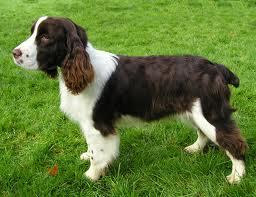
        • English SpringerEnglish Springer was originally bred to be a hunting dog, and is now one of the world's top show dogs.
        • French Bulldog, surprisingly, actually comes from England. Get more info on these Frenchies.
        • German Shepherd, with handsome good looks, was an original canine movie star before the breed became popular police and military dogs.
        • Golden Retriever could be the perfect family pet. Watch this clip to find out!
        • Great Dane, the Apollo of the dog world. This breed is the tallest in the world and also one of the most gentle.
        • Irish Setter, it's believed, has a dash of five different breeds in its lineage. But, no one knows for sure.
        • Jack Russell (also known as Parson Russell) is a live wire.
        • Labrador Retriever is a natural swimmer, thanks to webbed paws, an otter-like tail and a water-resistant coat.
        • Maltese is the world's oldest lap dog! The richest dog in the world is a Maltese.
        • Miniature Pinscher ("min pin"), despite the uncanny resemblance, is not related to the Doberman Pinscher.
        • Newfoundland is the most extreme waterdog on the planet! Learn more about this water retrieving dog.
        • Pembroke Welsh CorgiPembroke Welsh Corgi, the Queen of England's favorite pooch, can really bust a move!
        • Poodle is one of the most popular dog breeds in America. Learn more about this foo-foo dog.
        • Pug has turned in to one of the most popular dogs in the United States. What some call ugly, others might call irresistibly cute! Find out more about this lovable breed.
        • Rhodesian Ridgeback, the Navy Seal of dog breeds, can keep up with a running horse for 30 miles.
        • Rottweiler is a no nonsense creature who need lots of attention and training.
        • Saint Bernard is an attention-getting drooler with a sweet disposition.
        • Shar-Pei translates to "sand skin." Learn more about this unique, wrinkly breed.
        • Shih Tzu may be more closely related to the wolf than any other breeds. Whether a star in the ring or at home, the Shih Tzu is one of the oldest breeds of dog.
        • Soft Coated Wheaten Terrier is one of the best family dogs, and was originally bred as a substitute for a hound. This lively, spunky dog is one of the most fun dogs to own!
        • Hungarian VizslaVizsla, a majestic looking Hungarian breed, also comes odor-free!
        • Weimaraner was once used to bring down big game like bears, boars and deer.
        • West Highland White Terrier (Westie) is a tenacious little dog with a Type A personality.
        • Whippet, when it comes to speed, is the Ferrari of the dog world. This breed can even out pace a kangaroo!
        • Wire Fox Terrier may seem aggressive at first, but once you get to know them you realize how fun and energetic they are.
        • Yorkshire Terrier (Yorkie) is considered hypoallergenic and is the second most popular breed in the world.
        Season One: http://animal.discovery.com/videos/dogs-101-season-one/

        Season Two: http://animal.discovery.com/videos/dogs-101-season-two/

        Season Three: http://animal.discovery.com/videos/dogs-101-season-3/

        Minggu, 17 Oktober 2010

        It's That Time of Year Again...

        Here are some really cute pix that I thought I would pass on...hope you like them as much as I do! –Kim

        Cute Dog-Pumpkin Pictures


        Also, see: A Dog and His Pumpkin

        Rabu, 13 Oktober 2010

        Good Reason to Save the Trees!

        Thought this was funny! –Kim

        We have to stop cutting down trees!

        Global warming is one thing, but look at what might happen if we continue to clear our forests!

        We have to stop cutting down trees! This is getting serious!

        Kamis, 23 September 2010

        Train Your Rescue Dog to Do This!

        Here's a great video that I thought I would pass on...and these guys support animal resuce! –Kim

        OK GO – White Knuckles Video


        Selasa, 14 September 2010

        Cool Search Engine...

        Check out this cool feature of the Bing search engine! –Kim

        Try This Pictorial Search!

        This is a really cool feature of the recently launched Bing search engine. The example below shows only a small portion of all the available breeds (you can scroll down for more).

        Visit http://www.bing.com/visualsearch and type "Dog breeds" in the search field at the top, or click http://www.bing.com/visualsearch?g=dog_breeds# for the same results. When you get the results, you have the option to sort by various types/groups listed in the column on the left or the tabs at the top.

        Note that by holding your mouse cursor over any picture (our example above is the American Cocker Spaniel), you see an expanded box of information. And, by clicking the picture, you see an encyclopedia of detailed information, descriptions, pictures and even current news for that particular breed!

        Check it out!

        (If you have trouble viewing the pictorial listing, you may need to install Microsoft Silverlight on your PC.)