Unbelievable. Zzzzzzzz....
Source: http://www.youtube.com/watch?v=jCnAjel02lM

 |
| Little Lupita |
 |
| Lupita's Puppies |
Day 1 | |||
| Outside Temperature | Inside Closed Automobile | ||
| Indoor-Outdoor | Oven Thermometer | ||
9:00 am | 82°F / 27.8°C | 109°F / 42.8°C | ---- |
9:30 am | 87°F / 30.6°C | 115°F / 46.1°C | ---- |
10:00 am | 91°F / 32.8°C | 115°F / 46.1°C | ---- |
10:30 am | 94°F / 34.4°C | 114°F / 45.6°C | 115°F / 46.1°C |
11:00 am | 98°F / 36.7°C | 114°F / 45.6°C | 119°F / 48.3°C |
11:30 am | 100°F / 37.8°C | 117°F / 47.2°C | 124°F / 51.1°C |
12:00 pm | 101°F / 38.3°C | 119°F / 48.3°C | 127°F / 52.8°C |
1:30 pm | 112°F / 44.4°C | 124°F / 51.1°C | 130°F / 54.4°C |
2:30 pm | 125°F / 51.7°C | 130°F / 54.4°C | 159°F / 70.6°C |
4:00 pm | 98°F / 36.7°C | 110°F / 43.3°C | 110°F / 43.3°C |
Day 2 | |||
| Outside Temperature | Inside Auto – Four Windows Cracked | ||
| Indoor-Outdoor | Oven Thermometer | ||
9:15 am | 84°F / 28.9°C | 98°F / 36.7°C | 98°F / 36.7°C |
10:00 am | 88°F / 31.1°C | 103°F / 39.4°C | 105°F / 40.6°C |
10:30 am | 90°F / 32.2°C | 108°F / 42.2°C | 108°F / 42.2°C |
11:00 am | 92°F / 33.3°C | 109°F / 42.8°C | 109°F / 42.8°C |
12:00 pm | 95°F / 35.0°C | 113°F / 45.0°C | 113°F / 45.0°C |
1:00 pm | 101°F / 38.3°C | 114°F / 45.6°C | 115°F / 46.1°C |
2:00 pm | 110°F / 43.3°C | 123°F / 50.6°C | 120°F / 48.9°C |
3:40 pm | 112°F / 44.4°C | 129°F / 53.9°C | 128°F / 53.3°C |
4:00 pm | 115°F / 46.1°C | 132°F / 55.6°C | 130°F / 54.4°C |
Day 3 | |||
| Outside Temperature | Inside Auto – Two Windows Cracked | ||
| Indoor-Outdoor | Oven Thermometer | ||
8:30 am | 72°F / 22.2°C | 72°F / 22.2°C | 72°F / 22.2°C |
9:30 am | 80°F / 26.7°C | 95°F / 35.0°C | 95°F / 35.0°C |
12:00 pm | 88°F / 31.1°C | 105°F / 40.6°C | 105°F / 40.6°C |
1:50 pm | 99°F / 37.2°C | 109°F / 42.8°C | 109°F / 42.8°C |
2:30 pm | 104°F / 40.0°C | 120°F / 48.9°C | 120°F / 48.9°C |
| (both thermometers showed identical readings) | |||

 |
| X-ray of Jasper the Dachshund |
Airline Workers Give Grounded Pooch a Home for the Holidays
By Renee Nadeau Algarin
December 24, 2011
 Continental Airlines customer service reps have opened their homes in the spirit of this season of giving to a little dog that flew cross-county with his owner only to be barred from a flight to Spain.
Jane Bossi of Wakefield, a 28-year employee, said she was boarding customers on a Madrid-bound flight Sunday as a colleague tended to a Lake Tahoe woman and her 4-month-old puppy, Whopper.
The woman paid to have the pup fly under her seat from San Francisco to Boston, but she hadn't secured a health certificate from a vet to fly the pup out of the country. Hopes of placing the pup in a pet hotel went bust since he is too young to have had all his shots.
That's when Bossi opened her home to the pooch, offering to care for Whopper until his tearful owner returned from her trip to visit family in Spain.
"You just have to reach out and follow your heart and do something nice. She was out of answers. She did not know what else to do," Bossi said.
Bossi has emailed photos of the brindle Shar Pei-Boxer mix to his owner daily.
"I'm in love with him now because he's so beautiful," Bossi said.
Whopper will not be able to tag along on a surprise trip to New Hampshire to visit Bossi's mother, but luckily Bossi's co-workers have hearts as big as hers.
 "The mother in all of us just took over," said LaDonna Evans-Ampadu, a fellow customer service rep and longtime foster parent who will pick up Whopper at the airport today to bring him to her Worcester home for the holiday. She plans to use the experience to teach her two daughters about caring for a dog before they get one next year.
Bossi said she has gotten more out of the experience than she imagined.
"This puppy was almost given to me as a gift," she said. "You do things sometimes and you get more back than you ever felt you deserved."
Source: http://bostonherald.com/news/regional/view/2011_1224airline_workers_give_grounded_pooch_a_home_for_the_holidays
© Copyright the Boston Herald and Herald Media
Top 10 July 4th Holistic Pet Safety Tips
by Dr. Andrew Jones
July 4, 2011
 1. KEEP YOUR PETS AT HOME. It is always safer to leave them at home, in a quiet, closed in familiar place…your house! Our pets have hearing 10 times our own, so any loud noise is ESPECIALLY disturbing to them. I leave my own pets with a Kong toy stuffed with peanut butter.
2. THE SOUNDS OF MUSIC. Turn up the tunes to drown out some of the impending loud noises. This will screen out some of the loud sounds, lowering anxiety levels. Music with a slow even beat, such as classical, will work best.
3. FLOWER ESSENCES. Bach Rescue Remedies or other natural calming aids are a very safe alternative medication that may calm your anxious pet. Place 4 drops on your pet’s gums prior to leaving. (Follow the directions on the label.)
4. SOOTHING FINGERS. A type of therapeutic touch, called Tellington Touch has helped many pets with noise anxiety. The most effective area is the ear. Gently hold the ear flap between your thumb and forefinger. Gently stroke from the base of the ear to the ear tip; repeat the motion several times covering different sections of the ear. Use the same fingers to draw tiny circles at the base of the ear. Try both of the techniques on your dog when he is calm. If he reacts well, then try it the next time a storm approaches.
5. PET ID. Every Holiday involving Fireworks causes scared animals who run away and get lost. Ensure your pets have identification at all times. Also, check out medical info tags and GPS tracking devices.
6. KEEP YOUR PETS OUT OF HOT CARS. A puppy just died recently in Vancouver after being left for 3 hours in a parked car, with the sunroof open. The inside of the vehicle was over 100° F. Once again, LEAVE your pets at home.
7. SAFE TOPICALS FOR PETS. Read the labels to make sure the sunscreen or insect repellent can be used on your pet.
8. TOXIC GLOW JEWELRY – AVOID IT. Your pet may look cute glowing in the dark, but the glowing substance is orally and intestinally toxic.
 9. FIREWORKS AND PETS ARE A BAD IDEA. The noise is likely to severely frighten your pet. Then there is the risks of severe burns. The fireworks themselves have caustic substances, such as potassium nitrate and arsenic.
10. BE PREPARED. You should have a basic pet First Aid kit, plus know where your closest emergency veterinarian is. You can also make your own First Aid kit.
All in all, use common sense, and keep you and your pet safe.
Best wishes and have a Happy Holiday!
Dr. Andrew Jones
Source: http://www.theinternetpetvet.com/top-10-july-4th-holistic-pet-safety-tips/
Copyright © Four Paws Online Ltd. 2011
 Dr. Andrew Jones, DVM has been a practicing Veterinarian for almost 20 years. He is a strong advocate of Natural Pet Health Care, and knows that the most important way to heal our pets and prevent disease is through proper nutrition. He developed Ultimate Canine to give our dogs that extra advantage – something that will provide them with everything they need to develop stronger immune systems to fight disease, heal sore or stiff joints, and help them live longer, happier lives. Dr. Andrew Jones' main focus is on alternative, non-traditional remedies for pets. His interest in alternative pet medicine culminated in the writing of his book, Veterinary Secrets Revealed.
 Ear Anatomy 101
by Dr. Andrew Jones
Ear infections are one of the most common reasons that pet owners visit their veterinarian. Typically, I would see an increased number of ear infections in the spring.
Now is a good time to review ear anatomy, what causes ear infections, and exact steps you can use to prevent and treat them at home.
The ear consists of the outer portion (the pinna), the 2 sections of the ear canal (the vertical ear canal and horizontal ear canal), the ear drum and the inner ear.
Most ear infections involve the outer ear, meaning the vertical and horizontal ear canals.
 SIGNS
SIGNS
Your pet keeps shaking his head and scratching at his ears. Often you will see a foul-smelling black, yellow or brown discharge. The ears may be very red and tender.
CAUSES
Ear mites are infectious parasites primarily found in young cats. They are spread through direct contact from cat to cat. Ear infections are most typical in dogs. Most ear infections are caused by an underlying allergy. Some are caused by water in the ear after bathing or swimming. Dogs with large floppy ears, such as Basset Hounds, are prone to infections as their ear canals have poor air circulation, trapping moisture and allowing bacteria and yeast to grow.
The basis for PREVENTING ear infections is learning how to clean your pet's ears properly.
How to Clean Your Pet's Ears Properly
You will need an ear cleanser, cotton balls, and may need someone to help gently restrain your pet by holding their head while you clean his/her ears.
 Apply cleanser to the ear as shown or by soaking a cotton ball and placing it in the ear. Attempt to fill each ear canal until it is overflowing or apply approximately 1 teaspoon (5 ml) of Ear Cleanser. This can be a veterinary cleanser, or a mixture of vinegar and water.
Massage the cleanser into the ear canal by gently massaging the base of the ear where the cartilage turns. Massage for about a minute to dislodge the attached wax. If necessary, occlude the canal with a small amount of cotton during this process to protect against drenching, should your pet shake his/her head. For maximum benefit, allow cleanser to remain in the ear canal for at least 5 minutes before attempting to manually clean.
 With a cotton ball over your fingertip, wipe the accessible portion of the ear and ear canal clean (so the debris sticks to the cotton), as shown.
Let your pet shake out any excess cleanser.
Repeat the above steps in the other ear.
Don't insert cotton swabs into the ears! They should only be used in the visible portion of the ear and ear canal.
Treating Ear Infections
When your pet has an ear infection, you need to be doing more than just cleaning it.
 STEP 1 - Cleaning
CLEAN THEM. White vinegar (acetic acid) is very effective at removing debris from the ears and killing the yeast and bacteria responsible for ear infections. *If your dog or cat has red, open wounds, do not use this, as it will be painful. You need to use a soothing topical first (i.e., olive oil and Vitamin E).
Dilute the vinegar with water 50:50. Pick up a syringe from your local pharmacy and put 5 ml of the vinegar solution per 20 lbs of body weight into the affected ear. (Your cat would get 2.5 ml or 1/2 tsp). Grab the ear where it attaches to the head (at the ear base), gently squeeze your thumb and forefinger together, rubbing the solution deep into the ear canals. Wipe the inside of the ear well with cotton balls to remove debris coming from the ear canal. Continue to do this daily for 5-7 days. For dogs with recurring infections, this can be done weekly.
HEALING OILS. This is especially helpful if your pet's ears are inflamed and difficult to touch. You can use a mixture of 1 tablespoon of Olive Oil combined with 1 capsule of Vitamin E oil and insert that into your pets ear. Let it soak for 5 minutes, then rub the base of the ear well and wipe out excess debris with a cotton ball.
BURROW'S SOLUTION. This is one that I discuss for use in Hot Spots, but it can also be used for ear infections and ear cleaning. It is a solution of aluminum acetate in water. It is used as an astringent wet dressing to relieve inflammatory conditions of the skin, such as swelling, allergies and bruises. Burrow's solution has antibacterial effects, and will inhibit the growth of bacteria commonly found in ear infections. Apply 5-6 drops in both ears, cleaning twice daily.
STEP 2 - Treating the Infection
LESSEN THE INFLAMMATION. Most ear infections produce red, inflamed ears, so it is important to decrease the inflammation. ALOE or CALENDULA essential oil can be applied topically in the ears twice daily to decrease inflammation.
HERBAL INFUSION. Another oil infusion consists of: OREGON GRAPE, MARSHMALLOW AND GARLIC. Soak the dried herbs overnight in olive oil – this can also be mixed with Vitamin E.
TREAT THE INFECTION. GARLIC, SAGE and THYME have antibacterial and antifungal properties. One treatment is to soak garlic cloves overnight with Calendula oil. Remove the garlic and instill the calendula-garlic mixture twice daily.
HOMEOPATHIC: SILICA. Useful for dogs with recurrent ear infections. Most have excessive debris. The typical dose is 30C twice daily.
Common organisms causing the infections include yeast (suspect this if the debris is brown and has a sweet odor). Yeast often responds well to vinegar.
Less commonly, there is a bacteria called Pseudomonas. Pseudomonas aeruginosa is a specific species of bacteria that is resistant to almost every possible antibiotic. This is often found as a cause of chronic, recurring ear infections.
Silvadene/silver sulfadiazine
This is as a wound cream, but it also has activity against Pseudomonas. The cream can be prepared in water for an easier ear administration.
Tris-EDTA
EDTA is a binder of metals that are important to the bacterial cell wall. It is sold in veterinary clinics as TrizEDTA, a 4 ounce container to which 112 ml of distilled water is added. The method of usage is to place the TrizEDTA in the ear. In practice I would combine it with injectable Baytril, and I found it to be effective for Pseudomonas.
STEP 3 - Preventing the Infection From Coming Back
Most recurring ear infections have an underlying cause.
ALLERGY DIET. For dogs that get recurring ear infections, it is important to try a less allergenic diet. It should include a completely different protein with minimal added ingredients. For example, one commercial diet is made of fish and sweet potato.
BIOFLAVONOIDS. These are the wonderful groups of structures found in the pigment of fruits and vegetables. Quercetin has been effective for people with allergies and may be effective in dogs. The dose is 25 mg per 10 lbs of body weight daily.
FATTY ACIDS. These are a must for any allergy that triggers recurring ear infections: flax oil for dogs (1 tsp per cup of dog food) and fish oil for cats (1 capsule per 10 lbs). I advise therapeutic doses of EFA's at 1000 mg per 10 lbs, daily.
VITAMIN C. This may help your pet, and is worth a try. It suppresses the product released from cells in the body that causes itching (histamine), and is an antioxidant. Start with a low dose of 100 mg twice daily per 10 lbs of body weight.
ANTIOXIDANTS. Vitamin E may help: the dose is 100 IU per 10 lbs of body weight, once daily.
ANTIHISTAMINES. Benadryl is the most commonly used antihistamine. It is given at a dose of 1 mg per pound of body weight, 2-3 times a day. Cats respond well to Chlortripolon at 2 mg, 2-3 times a day. It is best to consult your veterinarian before using these medications. It often takes 14 days of using these to see if they are helping.
Some ear infections simply cannot be controlled with the above steps (although MOST can). In those advanced cases surgery may be your only option. BUT if you are diligent in cleaning, and attempt to prevent the infection in the first place, you can AVOID surgery.
Source: http://www.theonlinevet.com/members/latest_articles/earinfections.php (requires membership)Dr. Andrew Jones, DVM has been a practicing Veterinarian for almost 20 years. He is a strong advocate of Natural Pet Health Care, and knows that the most important way to heal our pets and prevent disease is through proper nutrition. He developed Ultimate Canine to give our dogs that extra advantage – something that will provide them with everything they need to develop stronger immune systems to fight disease, heal sore or stiff joints, and help them live longer, happier lives. Dr. Andrew Jones' main focus is on alternative, non-traditional remedies for pets. His interest in alternative pet medicine culminated in the writing of his book, Veterinary Secrets Revealed.Product Review:
Got an Anxious Pup? Silver Lining Herbs Can Help!
 In my years of being a doggy parent, and especially throughout my work with rescue dogs, I have many times come across dogs with fear and anxiety issues...
As a mom to an excruciatingly thunderphobic rescued Rat Terrier, I have tried many over-the-counter calming aids and sprays with little results. Whereas I used to enjoy looking forward to the advent of Spring in the Midwest and the subsequent April showers, I usually watch the Weather Channel in dread. Just the scent of rain in the wind can now send my "Sam" into a panic.
 (I've found him trembling in the dark corner of my kitchen closet pantry, behind the pop bottles... this after a long search. At least, this is better than behind the toilet.)
I'll have to admit that, when I decided to try "Keep Cool" by Silver Lining Herbs, I was a little skeptical. Sam had become more and more paranoid over the past couple of years, seeming to grow worse with every storm. His anxiety was increasing to include the sound of trucks, so his paranoia was becoming year 'round. He even began to bark and hide when large groups of people came to visit, like on family birthdays.
So, when I first gave Sam one of the little herbal capsules (in a small meatball), I wasn't expecting much... until I realized a couple hours later he was laying relaxed on the couch in the middle of company ... hmmmmmm ... that's odd ... coincidence?
 Tried it again when the groomer came to groom my Groomer-hating Yorkie... gave it to Sam AND my Yorkie... peace again! Both dogs were calm and NORMAL, not sleepy or drugged, just relaxed and alert. I could actually cut my Yorkie's nails. Sam didn't bark like a fanatic.
The true test came in March when we had our first storm of the season. I gave Sam the Keep Cool herbs about an hour before I knew the storm was supposed to hit. By the time the thunder started, he was relaxed and prepared. He didn't even hide this time; he just laid on the kitchen rug next to me while I was on the computer, alert but calm.
Sam has since weathered (pun) several storms the past few weeks, handled them fine, even slept in his bed during the night when the storms came through during the wee morning hours. I am actually beginning to enjoy Spring again!
(Now, I need to make sure the grid is off the drain pipe in the back, and not plugged with leaves, so the rain water doesn't back up to the house and leak into my basement... but I don't think Silver Lining Herbs can help with THAT. At least, SAM is calm as he watches me run out in the rain to unplug the pipe... maybe I should take them!)
 Keep Cool by Silver Lining Herbs really works! In my experience, it really does help my anxious or nervous dogs relax. I like the fact that my dogs remain calm and focused, not sleepy. The herbs are all natural, too, no extra unnecessary ingredients. Plus, and this is a BIG plus, the company is wonderful to work with... the service prompt and the personnel gracious. Easy to order, and their products are not expensive.
So, I thought I would just pass this info on to you, as a fellow dog owner who may be still dreading Spring and storm season, or struggling with anxious dogs in general – there is hope! Give Silver Lining Herbs "Keep Cool" a try (product #20)... your dog may rest easier, and you could save your sanity.
~~ Kim
PS - You may want to check out their other natural products for dogs, as well as for horses!
Sleep in Heavenly Peace
A Nativity Scene was erected in a church yard. During the night, the folks came across this scene.

An abandoned dog was looking for a comfortable, protected place to sleep. He chose baby Jesus as his comfort. No one had the heart to send him away, so he was there all night.
Maybe we should all have the good sense of this dog and curl up in Jesus' lap from time to time.... Not to mention the dog's breed was a "shepherd!"
Merry Christmas!
Source: http://puppycam.yuku.com/reply/193005/t/Re-Holiday-Photos.html
Shelter Dog Eases Pain Over Dead Marine
by Michael Daly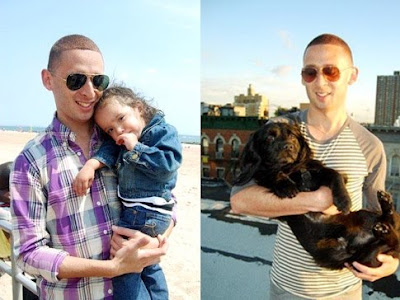 Sgt. Nicholas Aleman holds an unidentified girl and his 'shelter dog' Blackjack. Aleman was killed by a suicide bomb in Afghanistan on December 5th.
War is when 24-year-old Brooklyn Marine Sgt. Nicholas Aleman is killed in Afghanistan the same day his fiancée gets the flowers he sent for her 23rd birthday.
War is also when the Marine's 28-year-old sister in Kentucky has to tell her kids that money is tight and they must choose between Christmas presents and flying to New York for their uncle's funeral.
War is also when the Marine's 26-year-old sister is eight months pregnant and Skypes with him about the baby's middle name two days before joy is eclipsed by loss.
War is also when that sister's 2-year-old daughter pats her grieving grandmother with a reassuring little hand, saying "It's okay, it's okay."
War is also when that same little girl picks up a phone and begins punching numbers, saying she is calling her uncle the Marine, "my Tio."
And war is when the fiancée and the family take what comfort they can from the little black dog the Marine rescued from a Brooklyn shelter and named Blackjack before volunteering for his third deployment.
"He loved Blackjack," fiancée Elizabeth Rosenthal, whom he called Lizette, said yesterday. "He would go, 'Oh my God, he's so cute. He's my Blackjack.'"
"That was his baby," said the younger of the sisters, Stephanie Lugo.
"It's like a little piece of him," said the older sister, Jennifer Luciano.
The fiancée looked into the elegant little pooch's sad eyes.
"Shelter dog," she said tenderly.
 The fiancée wore a necklace her Marine had also sent for her birthday, a gold chain with three hearts symbolizing his love, "yesterday, tomorrow and forever." She had never imagined Dec. 5 would mark not just when she came into the world, but also when he was torn from it.
Rosenthal learned the terrible news the next day from Luciano. The fiancée had at first thought the sister was calling to continue a conversation about the iPods she wanted to get her kids for Christmas.
"She said, 'Oh, sweetie, you didn't finish telling me about the iPods,'" Luciano recalled.
Both sisters are soldiers, as are their husbands. Military pay is such that Luciano's 10-year-old daughter, Bethany, and 8-year-old son, Matthew, had to make a choice.
"I said, 'Okay, guys, you know what happened. I'm going to leave it up to you. Do you want to buy Christmas presents or do you want to be able to go to New York?" Luciano recalled.
The kids chose New York so they could help the heart-torn grown-ups.
"They're going to need it," Bethany said.
Bethany made one request.
"Can I just have $5 so I can buy Tio some flowers?"
Instead of getting iPods, the kids will be at St. Anthony of Padua Church in Greenpoint tomorrow morning for the funeral. Aleman and Lugo were altar servers there.
"We are always raised to know God has a plan," Lugo said.
Aleman always got top grades in school and had astonishingly good penmanship and loved to read on the subway so much he would board with a book and no particular destination. He went into the Marines at 17 and went on two deployments before leaving active service to attend Fordham University. He remained in the reserves and went to Afghanistan two months ago. He was a devoted son, brother and uncle. He and his fiancée were speaking of marriage and kids.
And, in the way of war, he was killed by a suicide bomber. Lugo likes what one friend posted on Facebook: "He's still on duty. Now he's guarding Heaven's gate."
In the way of Nicholas Aleman, he leaves his loved ones with the little black shelter dog he named Blackjack.
"Blackjack marches when he walks," the sister said.
Source: http://www.nydailynews.com/ny_local/2010/12142010-12-14_love_for_a_shelter_dog_eases_familys_fiances_pain_over_dead_marine_sgt_nicholas_.html
© Copyright 2010 NYDailyNews.com
 Walking an Arthritic Dog
Just like humans, many dogs experience the pain and discomfort of arthritis. For many of these dogs, because they do the same activity as their owners, they will have similar symptoms in the same joints as their humans. Arthritis in dogs is also treated very similar to human with pain relievers and physiotherapy to keep the joints from getting stiff.
Now there is recent evidence to show that walking your dog differently can actually improve their arthritis. The University of Medicine, Vienna, recently published an article in the American Journal of Veterinary Research comparing the different ways in which you walk your dog have different effects on their joints.
 In this case study, a specially designed treadmill was used for the dogs. Movements of the dogs while walking uphill, downhill and over obstacles was observed. These findings were then compared to the movements a dog makes while walking on the level.
The results showed that walking uphill significantly improved the movements of the hip area, while walking downhill had no improved results. Walking over obstacles was the most effective physiotherapy bending of joints in the fore and hind limbs.
Both walking uphill and over obstacles are easy enough done with your pet and do not require any special equipment. If your pet has arthritis and is in need of physiotherapy, you may want to try these alternatives for much more improvement to your pet's joints.

Source: http://www.youpet.com/blog/article/?articleid=443
YouPet, LLC ©2010

 It's summer and thunderstorms are a common occurrence, some dogs aren't bothered and yet others are terrified. So, when I came across some tips to help ease a dog's anxiety, I thought it would make a great post.
 Potential remedies include medication, desensitizing the dog to thunder and training it to retreat to a safe place when a storm hits.
 Swaddling a dog can also help, calming it like a baby wrapped in a blanket. It can be as simple as wrapping the dog in a light blanket or towel. For a snugger fit, an animal leotard called a sheep suit – typically used on show animals to keep the coat tidy before competition – is an inexpensive option. Some experts recommend an item that comes in standard and custom-made versions.
Here's a great article that I thought I would pass on...hope you find it informative! –Kim
Keep Pets Safe from Warm Weather
 If April showers bring May flowers, then the combination of the two mean a climbing heat index. While pets are eager to get outside as much as possible in warmer climates, the sunny weather is not without some perils for both cats and dogs.
Who should know better about pets, warm weather, and fun activities than Heidi Ganahl, CEO and founder of Camp Bow Wow USA (or Camp Bow Wow Canada), which boasts 200 nationwide franchises handling 108 camps a season. With each camp keeping about 100 dogs active on a daily basis, Ganahl is the premier expert on taking care of pets during the dog days of summer. So, Zootoo Pet News got her take on what owners can do to keep their pets safe this summer:
Q: In your experience, how have you watched the summer heat impact cats and dogs?
Ganahl: Summers provide lots of opportunities for fun with your dog — camping, hiking, swimming, kayaking and backpacking, to name a few — but also bring a unique set of health hazards and risks pet owners should be aware of including: dehydration, burned pads, parasite infestation, heat stroke, leptospirosis and seasonal allergies.
Q: Some heat-related "symptoms" are obvious — panting, drinking more water — but what are some more hidden behaviors which should indicate to owners that a cat or dog is feeling the effects of warm weather?
Ganahl: The eyes appear sunken and lack moisture. The mouth appears dry; gums and nose are dry.
Q: What is the most important activity a pet should be doing to beat the summer heat?
Ganahl: Keep them cool or out of the sun, and keep them calm and not too active!
Q: Are dogs or cats more prone to feel the effects of heat?
 Ganahl: Different issues for each, but here’s the scoop on keeping kitties safe: you can help your cat survive extremely hot weather by keeping him indoors in a cool interior room. Rubbing him down with a damp towel will help; so will immersing his feet in a tub of cool water. Wrapping a cold compress under the cat's neck will also help cool him off. He may fight at first, but most likely will appreciate it once he gets used to the idea. Try wrapping a plastic bag of frozen peas in a towel, and placing it in his bed for a cool spot to lie. The peas will rearrange themselves to fit his contours and he'll have a "custom spa" for cooling off.
In addition to Ganahl's advice, there are myriad ways owners should work on keeping their pets safe. Check out Zootoo's compiled list below to ensure your cat and dog have a carefree and fun summer:
Pets need sunscreen. Just like humans, your cat or dog can get extremely sunburned, especially if your pet has light colored hair. Animal sunburns can cause the same problems as those of humans: peeling, redness and even cancer. Skin cancer in pets is much more prevalent than one would assume, so purchasing pet-friendly sunscreen can go a long way in protecting the health of your pet when the heat kicks in. Places that are easy to forget, but prone to burning are: inside the nostrils, tip of nose, around your dog’s lips and the inside of ears for dogs with stand-up ears.
Never leave your pet in the car. It may seem like a car trip will cool off your pet, but it will probably do more harm than good if you leave your pet in the car for even a few minutes. The temperature in your car can rise over 100 degrees in a manner of minutes, so if you are bringing the dog in the car, make sure you can take him out on any errands you run when parking the vehicle.
Pets need extra water... but don’t let them drink just anything. Just like humans, pets need a lot of water during the summer, but be careful not to leave that water out too long. The heat can breed bacteria, which can sicken your pet if you've left it out in the sun too long. Give your dog extra water during the spring and summer, but be careful to change the water often. If dogs are extra thirsty, pets are bound to drink something they shouldn't drink. Puddles of what looks like water may be on the ground, but these may include antifreeze or other dangerous chemicals, so keep an eye when the dog is panting and looking for something to sip on.
Don't give your pet TOO much exercise. Don't overdo it in the heat. Keep walks to a gentle pace. If your pet is panting a lot or seems exhausted, it's time to stop. There are quick and easy ways for you and your pet to get in shape together this summer, but one of them is not overdoing it — try changing up the routine and jogging intervals with your dog, or walking up and down hills in order to exercise both yourself and your pet.
 Inside is better than outside. Even if your pet is in the shade, it can get sick quickly on hot days. As much as Fido wants to go outside, it is usually smarter to keep your pet inside as much as possible. If you have to leave the dog outside on a hot day, make sure to check on him/her regularly. NEVER leave the house on a hot day with the dog outside.
Watch for heatstroke. Dogs can develop heatstroke fairly quickly. Signs of this are excessive panting, staring, anxious expression on the face, warm skin, refusal to obey commands by owner, vomiting, collapse and rapid heartbeat. If you suspect that your pet is suffering from this, lower the animal's body temperature by applying towels soaked in cool water to the hairless areas of the body. Often, the pet will respond after just a few minutes of cooling, only to falter again with his temperature soaring back up or falling to well below what is normal. Take the dog to the vet immediately — don't try to solve this yourself.
Throw away uneaten food. Although you may leave wet cat or dog food food out during the day in winter months, summer months and warm weather lead to increased bacteria growth, so if your pet doesn't eat it immediately, bring the food inside to the cool house, where it can be kept for longer.
Source: http://petpac.net/news/headlines/keep_pets_safe_from_warm_weather/
© 2010 PetPAC
Here's a great collection of facts that I thought I would pass on...hope you find them interesting! –Kim
Interesting Dog Facts - Part 1
 A puppy's eyes do not open until it is 10 to 15 days old. Its vision is usually not complete until it is about four weeks old.
At birth, puppies are deaf, blind and have almost no sense of smell. They stay near their mother and siblings because of the warmth.
Puppies should remain with their mother until they are at least eight weeks old. During this time, she will teach them not to bite and how to get along with other dogs.
Dogs are submissive to those they feel have higher pack status.
Train your dog from day one, so she will think of you as the leader of the pack. Dogs instinctively want to earn the pack leader's approval.
The most confident puppy in a litter often makes the worst pet because he sees himself as the pack leader.
A dog can suffer from a poor self-image, just like humans. Bolster self-esteem with praise, affection and rewards.
To a young dog, exercise and play are the day's most important events. As a dog gets older, he lives for dinner time.
Even after your dog is old enough to be fed only once a day, he should be given a morning snack just to calm his rumbling tummy.
Family dogs who growl when family members are roughhousing aren't upset, they're just asking to become part of the game.
Give your new puppy its own sleeping den, even a simple cardboard box will do; this will make her feel more secure.
Ignore your new puppy's whining when you first isolate it for sleeping. If you don't you will only encourage it to whine more.
Sign up your dog for obedience school.
 The most important thing you can teach your dog is to sit and stay on command. Anytime you are having behavioral problems with your dog, begin your training by reteaching him to sit and stay.
The time to start teaching your dog to sit and stay is the day you bring her home.
Don't attempt to teach your dog anything else until he will sit and stay on command for at least one minute.
When teaching a puppy to come, begin by getting down to his level so he will not be encouraged to jump up on you.
A dog needs to work off excess energy every day.
Mixed-breed dogs usually have behavioral traits similar to the breed they most resemble in appearance.
When a small dog is aggressive toward people, don't pick him up. This only reinforces the behavior since he will see it as a reward.
Teach your dog to play catch.
Anyone can buy a dog, but it takes a kind owner to set its tail wagging.
Although a dog might be jealous of a new puppy in the beginning, this usually passes quickly since dogs are social animals.
Dogs become loyal, not because you feed them, but because of the companionship you give them.
Give your small or short-haired dog a sweater for winter walks.
Most dogs don't like to be left alone, so they howl. Leave the radio or television on to keep your dog company when you are away.
Dogs have twice as many muscles for moving their ears as people.
Housebreaking a puppy is just like toilet-training a child. First, you learn to recognize the signs; then, you react every time you see them.
Man could learn much from his dog: to be a true friend, to be faithful and to appreciate those who love him.
When a puppy is removed from its mother, don't make it spend the first night alone. Its loss of family is enough for one night.
As soon as your new pet is comfortable with its new home, move it to the location where you will want it to sleep for its lifetime.
A dog's nose is not just used for smelling, but also to keep him cool. That's why a dog pants. The longer the dog's nose, the better his cooling system works.
Dogs that chase cars have learned that cars run away. This behavior is reinforced each time he chases one away.
Teach your dog to fetch.
Never wake a sleeping dog by poking or shaking it.
Dogs are perfect companions. They never quarrel, fuss or fight with you, and they listen with great interest any time you speak in their direction.
A dog's smile runs from the depth of his eyes to the tip of his tail.
If you're finding it difficult to teach your dog to catch a ball, try tossing something soft like a knotted piece of fabric instead. Some dogs find softer items easier to catch.
Dogs love rituals and routines.
Anyone who says he works like a dog obviously doesn't own one.
Staring directly into the eyes of a strange dog may be interpreted as a challenge and may actually encourage the dog to bite you.
Dogs and cats turn in circles before lying down, because in the wild, this instinctive action turns long grass into a bed.
When walking your dog, put a few plastic bags in your pocket; they make great "scoopers." Slip one over your hand, pick up the pile, flip it inside out, tie and discard.
The average dog's mouth exerts 150 to 200 pounds of pressure per square inch. Some dogs can apply up to 450 pounds.
Puppies can't control their bladders overnight until they are at least four months old. Until then, cover the floor around the puppy's bed with newspapers.
Dogs are omnivorous. They need more than just meat to flourish.
People with more than one dog shouldn't try to treat them all as equals. Because pack position is important to a dog, this only encourages jealousy games.
 All dog owners should buy a long-handled pooper-scooper. It makes keeping the yard clean a breeze.
Dogs chew up your underwear because it smells like you.
You don't have to put up with your dog destroying flower beds or digging up the yard; simply fence off a separate section just for him.
Always say your dog's name before you give a command.
One in every three US families owns one or more dogs.
Choke chains can be dangerous.
A one-year-old dog is physically as mature as a 15 year-old human.
Dogs' internal clocks are really magnificent. They know when it's time for you to arrive home, feed them, or go to bed if you are normally on a schedule.
Brush your dog 3 times a week in the spring, and you'll have a summer free from shedding.
If someone in your household is allergic to dogs, bathe your dog every week. He will shed less dry skin. You can also add a teaspoon of cooking oil to your dog's dinner.
The only problem with loving a dog is that they live for only a short time.
If your dog reacts anti-socially toward visitors, put her in another room until she calms down. When you let her out, ignore her. This forces your dog to go to the visitors to get their social activity.
When a dog bays at the moon, it is following a basic urge to call the pack together.
Rituals are a basic part of canine behavior. Greeting, feeding, hunting and sleeping all include social performances.
The burying of bones is part of a dog's instinctive feeding ritual; shaking things viciously is part of the hunting ritual.
Source: http://www.dogquotes.com/dogfacts.htm
Copyright © 2001-2008 Australian Media Pty LTD
